Expo 2025 Osaka: A Complete Look Back at the Highlights
 Shinobu
From 13 April to 13 October 2025, Expo 2025 Osaka, Kansai took place on Yumeshima, an artificial island in Osaka Bay!
It was a true celebration of the future, bringing together ideas and cutting-edge technology from all over the world.
The theme was "Designing Future Society for Our Lives".
The site was designed as a "People's Living Lab", where visitors could try out what everyday life in the future might look like.
Whether you visited or missed it, this article looks back at what the Expo was like, from the basics and key highlights to how visiting worked at the time.

1. What Was Expo 2025 Osaka?
Expo 2025 Osaka, Kansai was a World Expo held over 184 days.
It was Osaka's first World Expo in 55 years, following the famous Expo '70.
Huge crowds came from all over Japan and around the world.
The theme, "Designing Future Society for Our Lives", expressed the hope of building a future where every life can shine, diversity is respected, and people live together.
The Expo was also positioned as a step towards the SDGs and Japan's vision of "Society 5.0", a super-smart society, and gave visitors a hands-on look at a future shaped by AI, robotics and IoT.
You can find more about the event on the official Expo 2025 website.
2. The Official Logo and Myaku-Myaku
The official logo, inspired by living cells, was called "Inochi no Kagayaki" ("the shining of life").
The official character, Myaku-Myaku, is a mysterious creature born when cells (red) and water (blue) became one.
Able to change its shape freely, it became a symbol of hope for the future and was hugely popular all over the site.

3. Tickets and Visiting Tips at the Time
Tickets were generally bought online in advance.
Popular pavilions required advance reservations, which were made through the official website and app.
The venue was completely cashless, so visitors paid by credit card or e-money.
Large luggage was not allowed inside, so visitors were advised to use lockers at hotels, stations or the airport.
Free water refill stations were set up around the site, so bringing a reusable bottle was a good idea.
4. The Grand Ring: The Expo's Iconic Landmark
The symbol of the site, the Grand Ring, was designed by architect Sou Fujimoto, the Expo's site design producer, and is recognised as the world's largest wooden structure.
About 2 km around and 12 m high on the inner side (20 m on the outer side), it encircled the pavilion area.
From the Skywalk on top of the ring, visitors could enjoy sweeping views of the whole site and Osaka Bay!
After the Expo, most of the ring is being dismantled and the timber reused, while a section will be preserved on site.
As a view that only existed during the Expo, it appeared in countless photos.

5. Pavilions of the World
Countries from around the world brought a wide variety of unique pavilions.
Japan Pavilion: A circular building made of wooden panels, where visitors could see how microorganisms turn waste into resources and generate biogas energy!
Germany Pavilion: Focused on sustainability, with a cute audio-guide mascot that led visitors through ideas about the circular economy.
Korea Pavilion: Its entire facade was a giant media wall, showing striking videos about future technology!
USA Pavilion: Under the theme "Imagine What We Can Create Together", its giant screen between two buildings became a popular photo spot.
Red Cross and Red Crescent Pavilion: Presented stories about the power of humanity and humanitarian action.
6. Beyond the Pavilions
The site was full of attractions where visitors could experience future technology first-hand.
Demonstration flights of "flying cars" drew a lot of attention.
In the evenings, a spectacular show combining water, light and music was held on the waterfront!
It was a place that sparked excitement for children and adults alike.
7. Getting There
Yumeshima is an artificial island with no general visitor parking near the venue, so most visitors came by public transport, shuttle bus, or park-and-ride.
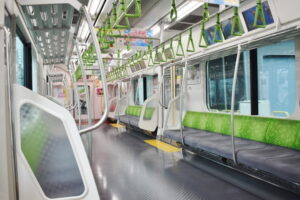
- Train: The Osaka Metro Chuo Line ran directly to Yumeshima Station, about 20 to 30 minutes from central Osaka.
- Shuttle bus: Services ran from major hubs such as Shin-Osaka Station, Osaka Station, Namba Station and Kansai International Airport.
- Other options: Visitors could also arrive by bicycle, ferry or taxi.

8. Summary
Expo 2025 Osaka, Kansai was a rare chance to experience the society, technology and culture of the future.
Visitors saw efforts towards the SDGs and Society 5.0 up close, and encountered ideas and innovations from all over the world.
The Expo left many people with new discoveries and lasting inspiration.
If you are visiting Osaka, why not relive the Expo spirit while exploring the city?
About Us
We run Ninja Experience Cafe in Osaka (Dotonbori), Kyoto (Gion) and Tokyo (Asakusa and Harajuku).
If you are in Osaka, drop by our Osaka Dotonbori branch, right in the heart of Minami.
Change into an all-black ninja outfit and experience Japanese culture through ninja training with shuriken (throwing stars) and blowguns.
Here is a surprise for many visitors: real shuriken are not thrown sideways like in anime, but overhand, like throwing a baseball. Our staff teach a simple "one, two... three!" rhythm, so even first-timers can hit the target.
The blowgun is easier than the shuriken, so even small children can join in with a little help from their parents.
Our ninja outfits are adjusted with ties, so they fit almost any body size.
Travelling solo? No problem. Our staff are happy to take photos and videos of you in action.
Curious about the difference between ninja and samurai? Ask our staff: as we like to say, "ninja were spies, samurai were warriors."
The cafe is indoors, so you can enjoy it on rainy, hot or cold days!
If you have ever thought "I want to be a real ninja!", come and visit us.
Book your ninja experience here.
Unauthorized copying and replication of the contents of this site, text and images are strictly prohibited.