
Japan, the Railway Powerhouse: Why Trains Flourished
 Shinobu
Travel across Japan, and you quickly realise trains are far more than mere transport.
Stations form the core of urban districts, departures run with minute-by-minute precision, and regional lines double as attractions in their own right.
Why did railways flourish so extensively here?
The answer lies in a convergence of geography, post-war reconstruction, rapid economic growth, pioneering private railway ventures, and sound institutional planning.
The launch of the Tokaido Shinkansen in 1964, in particular, came to symbolise not only a milestone in railway history, but modern national progress itself.

1. Why Japanese Railways Developed So Rapidly
The primary driver of Japan’s railway growth is its geography.
With mountainous terrain, limited plains, and elongated settlement corridors, mass rail transport proved far more rational than highway-centric urban planning.
Rail has also served as a symbol of modernisation since the Meiji era. Following the opening of Japan’s first line between Shimbashi and Yokohama in 1872, tracks gradually linked major cities and ports.
Railways were developed as essential instruments of state-building.
Dense urban populations created a positive feedback loop: high ridership made lines commercially viable, while housing and commerce congregated around stations, drawing even more passengers.
This foundation established the rail powerhouse seen today.

2. High-Speed Rail Pioneered by the Shinkansen
The Shinkansen bullet train remains essential to Japan's rail story.
Inaugurated for the 1964 Tokyo Olympics, the Tokaido Shinkansen slashed travel times between Tokyo and Osaka, capturing global attention as a showcase of post-war recovery.
Its success relied on comprehensive technological breakthroughs, from extensive tunnelling and lightweight carriages to aerodynamic engineering and advanced signalling systems.
Beyond speed, the bullet train reshaped regional economies.
Stations spurred clusters of hotels, dining, and shops, expanding commercial and tourism demand.
The network later expanded into lines such as the Sanyo, Tohoku, and Kyushu Shinkansen, creating primary arteries across the country.
3. How Private Railways Shaped Urban Communities
Private railways are a defining feature of Japanese rail culture.
Operators such as Hankyu, Tokyu, Odakyu, Seibu, and Kintetsu did not merely lay track; they built residential districts, department stores, and leisure destinations along their lines, creating genuine lifestyle value.
Between the 1910s and 1930s, these operators pioneered suburban growth by creating commuter neighbourhoods, establishing commercial hubs around terminals, and opening weekend attractions.
Hankyu integrated residential and retail growth along corridors connecting Osaka, Kobe, and Kyoto.
Tokyu spearheaded suburban development in south-west Tokyo, establishing the standard for railway brand equity.
Railway firms managing property portfolios and department stores remain a classic Japanese convention today.

4. A Natural Synergy Between Cities and Trains
Japanese metropolises such as Tokyo, Osaka, and Nagoya evolved hand-in-hand with railways.
Offices, shops, and housing cluster tightly around stations, making trains the most practical travel choice.
Transit hubs like Shinjuku, Shibuya, Umeda, and Namba function as complete mini-cities.
Exiting a ticket barrier brings you directly into vast multi-level department stores, underground shopping avenues, and entertainment venues.
Limited road space and high parking costs in urban centres further reinforced rail reliance, turning trains from an optional convenience into default daily infrastructure.

5. Institutional Reforms Backing the Railway Network
Public policy provided steady support.
Following the Second World War, Japanese National Railways (JNR) operated main trunk routes across the country.
In 1987, the privatisation and division of JNR into the JR Group improved operational efficiency while elevating service standards.
This transition balanced public utility with commercial sustainability.
Regional JR companies integrate standard train services, high-speed lines, station retail complexes, and curated travel packages.
Long-term coordination between transit planning and urban zoning ensured that as transit networks expanded, communities flourished alongside them.
6. Bonus: Rail-Centric Itineraries across Japan
Centring an itinerary on trains turns travel time into a memorable feature of any holiday.
Travel agencies like Club Tourism offer dedicated rail tours featuring limited-run event carriages, scenic local routes, and sleeper services.
Another popular approach is taking a half-day or full-day sightseeing train, with themes ranging from gourmet dining and panoramic carriages to historic steam locomotives:
- Yufuin no Mori and 36 Plus 3 in Kyushu
- TOHOKU EMOTION in north-eastern Honshu
- Belles Montagnes et Mer (Berumonta) in the Hokuriku area
- Sagano Romantic Train in Kyoto
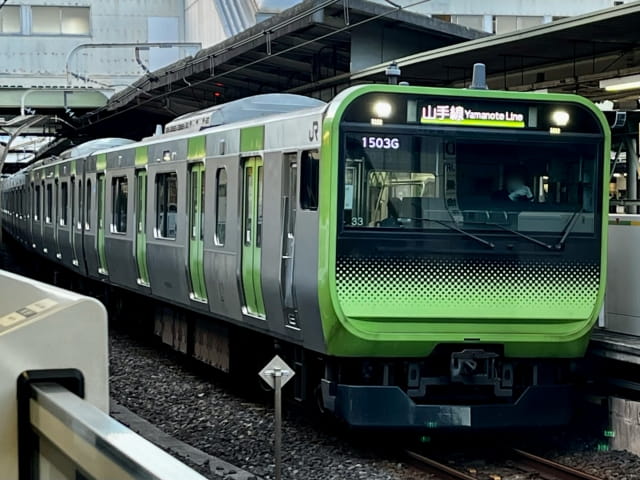
For urban exploration, a rail pass simplifies getting around Tokyo. The Tokyo City Pass facilitates smooth sightseeing by pairing city attractions with straightforward rail journeys. You can watch high-speed trains depart from Tokyo Station in the morning, tour neighbourhood terminals in the afternoon, and take the Yamanote Line or subway to evening entertainment districts.
Tokyo City Pass Official Website
Hop Off the Train for a Ninja Experience
Thanks to Japan's dense rail network, many attractions sit just a few minutes from a station, and Ninja Experience Cafe is no exception.
All four of our locations in Tokyo, Osaka and Kyoto are a short walk from major stations, so an hour of ninja training slots easily into a rail-based itinerary.
- Ninja Experience Cafe Asakusa (Tokyo): 5 minutes on foot from Asakusa Station on the Tsukuba Express Line
- Ninja Experience Cafe Harajuku (Tokyo): 3 minutes on foot from Harajuku Station on the JR Yamanote Line
- Ninja Experience Cafe Osaka Dotonbori: 2 minutes on foot from Namba Station on the Midosuji and Sennichimae Lines
- Ninja Experience Cafe Kyoto Gion: 6 minutes on foot from Gion-Shijo Station on the Keihan Main Line, or 8 minutes from Kyoto-kawaramachi Station on the Hankyu Kyoto Line
Because the cafe is entirely indoors, it also makes a handy plan for rainy days between train journeys.

7. Summary
A combination of steep geography, high urban density, post-war ambition, the pioneering Shinkansen, integrated private developments, and balanced governance forged Japan’s world-class rail system.
In Japan, boarding a train is an authentic cultural experience.
On your next visit, plan not just where you wish to go, but how you will travel there.
What are we?
We run Ninja Experience Cafe in Tokyo, Kyoto and Osaka, Japan.
Here you can immerse yourself in Japanese culture through experiencing ninja training.
Both adults and children are welcome to try their hand at defeating the ninja master inside the cafe.
The cafe is an indoor interactive zone, so it can be enjoyed even on rainy days.
If you are thinking "I want to be a real ninja too!” or interested in becoming a real ninja, please visit us.
Reservations can be made here.
Unauthorized copying and replication of the contents of this site, text and images are strictly prohibited.

